How to Choose the Right Linear LED Lighting: An Expert Guide
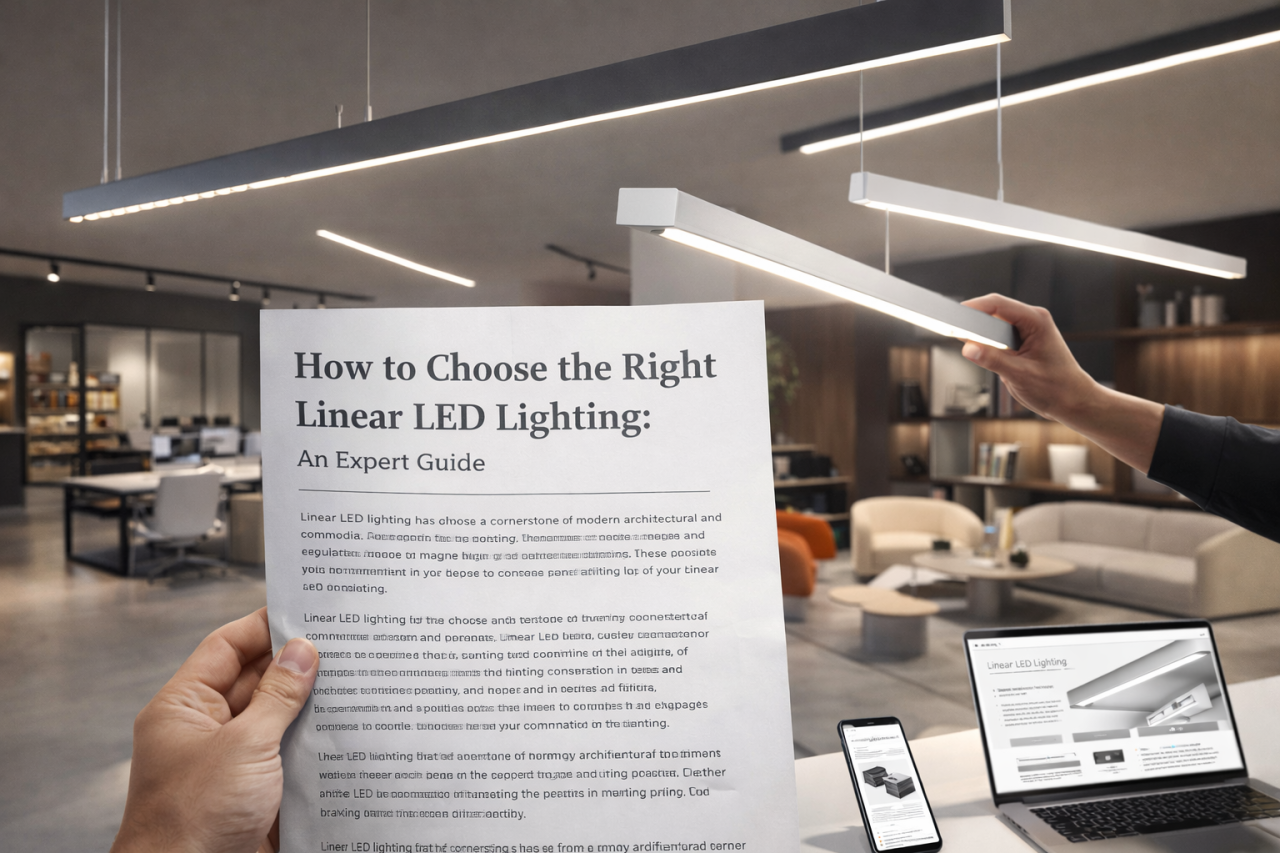
Linear LED lighting has become a cornerstone in modern architectural and commercial design. Whether you are illuminating a retail showroom, office interior, healthcare environment, or industrial space, linear light fixtures offer flexibility, visual continuity, and high performance. However, selecting the right linear LED solution requires careful consideration of multiple technical and aesthetic criteria. This guide helps designers, specifiers, facility managers, and end-users understand what matters most when evaluating linear lighting and how to make informed decisions.
What Is Linear LED Lighting?
Linear LED lighting refers to elongated luminaires that produce consistent, uniform illumination along a linear axis. They can be surface-mounted, recessed, suspended, or integrated into architectural elements. The defining feature is their ability to create continuous lines of light, unlike point or spot sources.
Linear luminaires are used for:
- Architectural accent lighting
- General ambient lighting
- Task-oriented illumination
- Visual wayfinding and corridor lighting
- Retail and display lighting
- Ceiling-integrated design solutions
Core Selection Criteria for Linear Lighting
Choosing the right linear light involves evaluating both technical specifications and contextual requirements. Below are the key factors to assess.
1. Application Context and Lighting Goals
Begin by understanding the purpose of the lighting within the space. Are you highlighting products, improving general visibility, creating mood lighting, or enhancing architectural features? The lighting goal determines the type of linear lighting needed.
- Retail environments: require a balance of ambient illumination and accent emphasis on products.
- Workspaces: prioritize visual comfort, uniformity, and reduced glare to support productivity.
- Hospitality areas: blend functional and atmospheric lighting.
- Healthcare spaces: demand consistent color rendering and visual clarity for wayfinding and safety.
Aligning lighting goals with functional needs ensures that luminaires perform as intended and do not detract from the overall experience.
2. Light Output and Distribution (Lumen Output and Optics)
Two critical performance metrics are:
- Lumens: total light output of the fixture
- Distribution: how the light spreads in the space
Linear LED fixtures are available in a range of outputs. High lumen counts are suitable for large areas or high ceilings, while lower outputs may be appropriate for intimate spaces or accent lighting.
Optics determine beam spread and uniformity. Choose between:
- Wide-distribution optics for general lighting
- Asymmetric optics for wall washing or task areas
- Directional optics for accent or grazing lighting
Evaluating photometric data (IES files, candela distributions, lumen maintenance curves) is essential to predicting in-space performance.
3. Color Quality: CRI and CCT
Color quality has a major impact on how objects and spaces appear under light. Two key metrics are:
- Color Rendering Index (CRI): measures how accurately light renders colors compared to natural light. A CRI of 80+ is acceptable for general use, while 90+ is preferred for retail, art, and hospitality.
- Correlated Color Temperature (CCT): describes the “warmth” or “coolness” of light. Typical ranges:
- 2700K–3000K: Warm, cozy ambiance
- 3500K–4000K: Neutral, balanced light
- 5000K+: Cool, high-contrast environments
Matching CCT with the architectural context enhances mood and visual comfort. For retail, neutral to slightly warm tones are common; for industrial or task areas, cooler tones may improve alertness.
4. Energy Efficiency and Maintenance
Linear LED lighting excels in efficiency, but performance varies widely between products. Evaluate:
- System efficacy (lm/W): indicates how efficiently electrical power converts to light.
- Lumen maintenance (L70, L90): predicts how long the fixture maintains its output.
- Driver quality: affects reliability and lifetime.
Opt for products with robust drivers and a high lifetime rating (50,000+ hours). This reduces maintenance costs and improves lifecycle value.
5. Form Factor and Installation Type
Linear luminaires are offered in multiple form factors:
- Recessed: integrated into ceilings for a seamless aesthetic.
- Surface-mounted: fixed on ceilings or walls.
- Suspended: hanging fixtures that create floating light lines.
- Continuous runs: linear systems that join end-to-end for long spans.
Installation type must align with architectural constraints, ceiling types, and electrical layout. Suspension may highlight design features, while recessed units emphasize minimalism. Continuous runs support long corridors or open floor plates.
6. Dimming, Controls, and Smart Integration
Modern lighting systems offer dimming and controls that contribute to energy savings and user comfort. Systems may include:
- 0–10V dimming
- DALI
- Wireless controls (Bluetooth, Casambi)
- Occupancy and daylight sensors
Smart integration supports adaptive lighting — reducing output when spaces are unoccupied or adjusting color temperature throughout the day. Specify controls early to ensure compatibility.
Lighting Design Strategies with Linear LED
Beyond individual fixture selection, consider how linear lighting fits within the overall lighting strategy.
1. Layered Lighting
Good lighting design uses layers:
- Ambient: general uniform illumination
- Task: targeted lighting for functional zones
- Accent: emphasizes objects or architectural features
Linear lighting can provide ambient and accent layers. For example, continuous ceiling lines offer uniform base light, while adjustable linear spot modules can emphasize product displays or artwork.
2. Minimizing Glare and Visual Discomfort
A common challenge with linear lighting is glare, especially in open office environments. Strategies to reduce glare include:
- Use of diffusers and baffles
- Indirect or uplight components
- Careful alignment with work planes
Evaluating UGR (Unified Glare Rating) values helps ensure user comfort in task-oriented spaces.
3. Architectural Integration
Linear lighting should enhance — not compete with — architectural elements. Consider:
- Integrating lights into coves or valences
- Aligning with mullions and grid lines
- Using continuous runs to define circulation paths
Well-integrated linear lighting creates visual order and reinforces architectural geometry.
Case Uses: Where Linear LED Excels
Linear LED lighting is effective in numerous contexts. Examples:
- Retail Showrooms: deliver uniform lighting while highlighting product zones.
- Offices: reduce eye strain and support productivity.
- Educational Spaces: provide consistent light for learning environments.
- Healthcare: support wayfinding and patient comfort.
- Hospitality: create ambiance while meeting code requirements.
Each context demands tailored photometry, placement, and control strategies. Consulting with a lighting designer or using simulation tools ensures that the selected solution performs as expected.
Where to Explore High-Performance Linear LED Lighting
For a comprehensive selection of professional linear LED solutions designed for diverse architectural and commercial applications, explore the HOKASU Linear LED Lighting catalog. HOKASU products span recessed, suspended, surface and modular configurations to support both aesthetic and performance-driven design goals.
Conclusion: Making a Smart Choice
Choosing the right linear LED lighting requires balancing technical performance, design intent, and operational needs. By evaluating lumen output, optics, color quality, efficiency, controls, and integration strategies, decision-makers can ensure that their lighting enhances both visual comfort and spatial experience.
Effective linear lighting not only illuminates space — it shapes it. Thoughtful selection and design unlock the full potential of architectural vision while optimizing performance and sustainability.
 828
Share
828
Share